
Mushroom Adaptogens: Lion’s Mane, Reishi, and Cordyceps Explained

Reading Time: 10–12 minutes
Key Highlights
What are functional mushrooms and how do they act as adaptogens?
What active compounds are found in Lion’s Mane, Reishi, and Cordyceps, and what do they do?
Are functional mushrooms a replacement for medical treatment?
How are functional mushrooms being incorporated into modern supplements, foods, and beverages?
In the natural world, mushrooms are not only a delicious culinary ingredient but also a biological resource with a profound history of medicinal use. Beyond providing rich nutrition at the dinner table, certain “functional mushrooms” have gained recognition for their unique active compounds, which are believed to act as adaptogens. Adaptogens are natural substances that help the body maintain balance, enhance resilience to stress, and adapt to changes in the environment—all without disrupting normal physiological function.
As scientific research deepens, scientists have discovered that mushrooms contain a wide array of bioactive components, such as polysaccharides, triterpenes, enzymes, and other compounds. These substances may help regulate immune function in both directions, while also supporting energy metabolism, emotional stability, and neuroprotection. Because of these properties, functional mushrooms are increasingly being used in dietary supplements, beverages, and even food recipes.
1. Functional Mushrooms and the Concept of Adaptogens
Characteristics of Functional Mushrooms
Unlike commonly consumed culinary mushrooms such as shiitake or enoki, functional mushrooms provide more than just protein, dietary fiber, and vitamins. They are also rich in bioactive compounds that can regulate physiological processes. Widely studied functional mushrooms include Reishi (Ganoderma lucidum), Lion’s Mane (Hericium erinaceus), Cordyceps (Cordyceps sinensis), Chaga, Agaricus blazei, Maitake, and Tremella. Their active components are chemically diverse and include:
- Polysaccharides: the most well-known compounds, associated with immune regulation.
- Triterpenes: abundant in Reishi, with antioxidant and liver-protective potential.
- Nucleoside compounds such as cordycepin: found in Cordyceps, linked to energy metabolism.
- Polyunsaturated fatty acids and enzymes: involved in metabolic and anti-inflammatory responses.
These components rarely act alone. Instead, they work in a complex, synergistic way to help the body regulate immune activity, maintain stable energy, and relieve stress. This balanced, regulating property is what characterizes them as adaptogens.
Mechanisms of Adaptogens
The core action of adaptogens is not to deliver an immediate “drug-like” effect, but to provide long-term modulation and protection. They typically work through mechanisms such as:
- Supporting the nervous system: easing anxiety and depression, improving sleep quality.
- Immune regulation: enhancing defenses when immunity is low, but also calming excessive immune responses such as inflammation.
- Boosting energy metabolism: increasing cellular ATP production, reducing fatigue.
- Antioxidant activity: neutralizing free radicals, thus protecting cells and tissues from oxidative damage.
Because of this “balancing rather than pushing” action, adaptogens have gained growing attention as tools to cope with modern stress and lifestyle demands. Let’s now look more closely at three of the most representative functional mushrooms.
2. Lion’s Mane: Guardian of the Brain and Digestive System
Lion’s Mane (Hericium erinaceus), named for its mane-like appearance, has long been used in traditional Chinese medicine to “strengthen the spleen and stomach, boost energy, and calm the mind.” Modern research has confirmed its remarkable potential in protecting the nervous system and supporting digestive health.

Potential Effects on the Nervous System
Lion’s Mane has drawn the most interest in the field of brain and central nervous system health:
Mood and anxiety improvement:
- A small clinical trial on menopausal women found that supplementation with Lion’s Mane significantly reduced symptoms of depression and anxiety.
- Another study on overweight individuals showed reductions in both anxiety and depression, alongside better sleep quality, after consuming Lion’s Mane.
Cognitive function support:
In a 2008 Japanese study, older adults with mild cognitive impairment took Lion’s Mane extract daily for 16 weeks. Their cognitive test scores improved significantly compared to the placebo group, suggesting Lion’s Mane may help delay cognitive decline.
Possible mechanism: Compounds known as hericenones and erinacines, found in Lion’s Mane, are thought to stimulate the production of nerve growth factor (NGF), which promotes regeneration and repair of nerve cells.
Support for the Digestive System
Lion’s Mane also shows promising effects on the digestive tract:
- In a study involving patients with atrophic gastritis, 63% of those taking Lion’s Mane tablets for three months reported relief from pain, compared to only 36% in the placebo group.
- Endoscopic examinations revealed that 52% of patients in the Lion’s Mane group showed visible improvement in gastric tissue, compared to just 8% in the placebo group.
This suggests that Lion’s Mane may help repair gastrointestinal tissues and ease stomach discomfort.
3. Reishi: Classic Symbol of Immune Regulation and Antioxidation
Reishi (Ganoderma lucidum) is revered in Chinese culture as the “Mushroom of Immortality.” With over two millennia of documented medicinal use, it has become a symbol of vitality and longevity. Modern science has confirmed that Reishi contains numerous beneficial compounds.
Key Active Components
- Reishi polysaccharides: known to activate immune cells and boost overall immune response.
- Triterpenes: such as ganoderic acids, which show protective effects on the liver and nervous system, while also exhibiting strong antioxidant capacity.

Immunity and Metabolism Modulation
Clinical studies published in the International Journal of Immunopharmacology- reported that:
- Individuals with weakened immunity who took 1.5–3 g of Reishi polysaccharides daily for 8 weeks experienced a 40–60% increase in NK cell activity.
- These participants also reported a 35% reduction in infection rates, and allergy-prone individuals showed a 25–30% decrease in eczema and hives flare-ups.
These findings support the idea that Reishi strengthens immune defenses through balanced regulation.
Antioxidant and Cellular Protection
Reishi’s triterpenes help neutralize free radicals, unstable molecules that damage cells and accelerate aging. By reducing oxidative stress, Reishi supports healthy aging and resilience against chronic disease. This is the scientific basis behind its traditional reputation for promoting longevity.
Complementary, Not a Replacement for Medicine
Despite its powerful properties, Reishi is not a substitute for medical treatment:
- Diabetic patients cannot replace insulin or metformin with Reishi.
- Insomniacs should not rely on Reishi in place of prescription medications.
- Patients with severe liver disease must seek proper treatment rather than depending solely on Reishi.
The most reasonable way to use Reishi is as a daily supportive supplement for wellness—not as a replacement for professional medical care.
4. Cordyceps: Enhancer of Energy Metabolism with Emerging Anti-Cancer Research
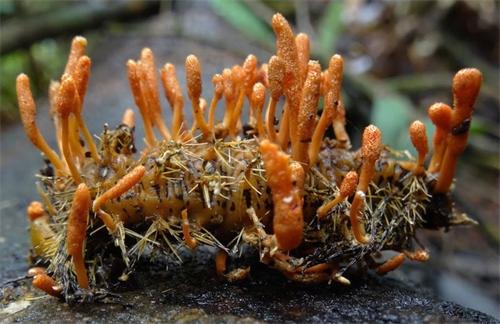
Among functional mushrooms, Cordyceps (Cordyceps sinensis) is one of the most legendary. Parasitizing on insect larvae and sprouting fruiting bodies from the host, Cordyceps has long been considered a rare and precious tonic, even nicknamed “soft gold.” Modern science has begun to unravel its mechanisms, particularly in energy metabolism and cancer research.
Boosting Energy Metabolism
Cordyceps contains cordycepin, a nucleoside compound that can stimulate ATP production. Since ATP is the body’s fundamental energy currency, higher levels mean reduced fatigue and greater vitality.
- Some athletes use Cordyceps supplements to enhance endurance.
- Research has shown improvements in aerobic capacity and reduced exercise fatigue, although these results are more consistent in animal studies than in human trials.
Potential Anti-Cancer Properties
Research by scientists at the University of Nottingham found that cordycepin could inhibit the proliferation of cancer cells. The journal FEBS Letters also reported this finding, suggesting that cordycepin might inspire the development of new anticancer drugs.
However, these results are largely limited to cell culture and animal experiments. Robust human clinical trials are still lacking, meaning Cordyceps’ role in cancer treatment remains preliminary.
Precautions in Use
Cordyceps should not be regarded as a medicine, nor should it replace professional therapy. Special populations—such as pregnant women, breastfeeding mothers, and people with chronic illnesses—should use Cordyceps only under medical supervision to avoid unnecessary risks.
5. Modern Applications and Future Trends of Functional Mushrooms
Thanks to accessible raw materials and growing consumer interest, functional mushroom products are becoming increasingly diverse:
- Traditional supplements: capsules, tablets, powders.
- Everyday foods and beverages: mushroom-infused coffee, tea, and energy drinks.
- Nutritional blends: combinations with probiotics, vitamins, or other adaptogens for synergistic effects.
These innovations have helped functional mushrooms move beyond the realm of traditional herbal medicine into the mainstream health and wellness industry. Still, it is important to emphasize that their current role is largely supportive and preventive—not a replacement for medical treatments.
Ongoing scientific research continues to explore their mechanisms and potential. In the future, we may see clearer evidence of how these mushrooms work and how they can be integrated into healthcare practices.
Conclusion
On humanity’s journey to pursue health, resilience, and longevity, functional mushrooms stand out as a natural option with vast potential. Lion’s Mane, Reishi, and Cordyceps each bring unique benefits—supporting the brain and digestion, modulating immunity, boosting energy metabolism, and possibly influencing cancer research. While they are not miracle cures, they represent a bridge between traditional wisdom and modern science, offering a holistic path toward balance and well-being.
FAQ
1. Are functional mushrooms considered adaptogens?
Yes. Functional mushrooms such as Lion’s Mane, Reishi, and Cordyceps are classified as adaptogens because they help the body maintain balance, support resilience to stress, and regulate physiological processes without causing major disruptions.
2. Can Lion’s Mane improve memory and cognition?
Research suggests that compounds in Lion’s Mane, like hericenones and erinacines, may stimulate nerve growth factor (NGF), supporting nerve regeneration and potentially improving cognition and mood, especially in older adults or those with mild cognitive impairment.
3. Is Reishi effective for boosting immunity?
Yes, Reishi polysaccharides have been shown to enhance immune cell activity, improve natural killer (NK) cell function, and reduce infection rates. However, its role is supportive and should not replace prescribed medications for serious immune disorders.
4. Can Cordyceps increase athletic performance?
Some studies, mainly in animals and small human trials, suggest that Cordyceps may improve energy metabolism by increasing ATP production, reduce fatigue, and enhance endurance. Results vary between individuals.
5. Are functional mushrooms safe for everyone?
Most healthy adults can use these mushrooms safely in recommended doses. Pregnant or breastfeeding women, individuals with chronic illnesses, or those taking medications should consult a healthcare professional before use.
6. Do functional mushrooms replace medical treatment?
No. Functional mushrooms provide supportive and preventive benefits, but they do not replace prescription medications or therapies for conditions like diabetes, severe cognitive decline, or cancer.
References
- Ramesh, P., et al. (2022). Functional mushrooms: Bioactive compounds and health benefits. Frontiers in Pharmacology, 13, 841031.
- Mori, K., et al. (2009). Effects of Hericium erinaceus on cognitive function in elderly adults with mild cognitive impairment. Phytotherapy Research, 23(3), 367–372.
- Boh, B., Berovic, M., Zhang, J., & Zhi-Bin, L. (2020). Ganoderma lucidum: A medicinal mushroom with promises for cancer therapy. Cancer Letters, 503, 65–77.
- Tuli, H. S., Sharma, A. K., Sandhu, S. S., & Kashyap, D. (2013). Cordycepin: A bioactive metabolite with therapeutic potential. Life Sciences, 93(23), 863–869.
- Wasser, S. P. (2017). Medicinal mushrooms as a source of antitumor and immunomodulating polysaccharides. Applied Microbiology and Biotechnology, 91(5), 1205–1223.
- Patel, S., & Goyal, A. (2012). Recent developments in mushrooms as functional foods. Applied Microbiology and Biotechnology, 96(4), 863–873.
About the Author
Dr. Emily Harper, PhD, Mycology and Functional Nutrition Specialist
Dr. Emily Harper is a researcher and clinician with over 12 years of experience studying functional mushrooms and adaptogens. She holds a PhD in Mycology and specializes in integrating medicinal mushrooms into nutrition and wellness strategies. Dr. Harper has published extensively on bioactive compounds in medicinal mushrooms, their mechanisms of action, and their applications in cognitive, immune, and metabolic health.
Editorial Transparency Statement
This article is educational and evidence-based, drawing on peer-reviewed research and authoritative sources.
No commercial sponsorship or promotional influence impacted the content.
Disclaimer
This article is for informational purposes only and does not constitute medical advice.
Functional mushrooms are supportive supplements, not replacements for professional medical care.
Misuse or overconsumption can lead to adverse effects or interactions with medications.
Always consult a physician, registered dietitian, or qualified health practitioner for guidance tailored to your individual health needs.
Recommend for you:

From Innovation to Necessity: WHO Recognizes Semaglutide and Tirzepatide as Essential Drugs
Among the most striking updates in this globally significant document is the addition of two drugs that have attracted enormous attention from both the medical community and society in recent years—Semaglutide and Tirzepatide.
The Gut-Skin Connection: How Your Diet and Microbiome Influence Eczema and Psoriasis
When it comes to chronic skin conditions such as eczema and psoriasis, most people focus on topical creams, steroid treatments, or lifestyle triggers like stress.
Aging and Anxiety: Why Worry Intensifies with Age and How to Break the Cycle
In traditional thinking, aging has long been regarded as a natural rhythm, unfolding slowly like the changing of the seasons.
Genetic Testing for Age-Related Diseases: Knowing Your Risks (Like APOE for Alzheimer's)
Among the many applications of genetic testing, assessing one’s risk for age-related diseases has gained particular attention.