
From Innovation to Necessity: WHO Recognizes Semaglutide and Tirzepatide as Essential Drugs

Reading Time: 9–11 minutes
Who This Article Is For
- Individuals managing obesity, type 2 diabetes, or metabolic syndrome
- Readers exploring GLP-1–based medications for weight loss or cardiovascular risk reduction
- Digital nomads, international travelers, or expatriates interested in global drug accessibility and affordability
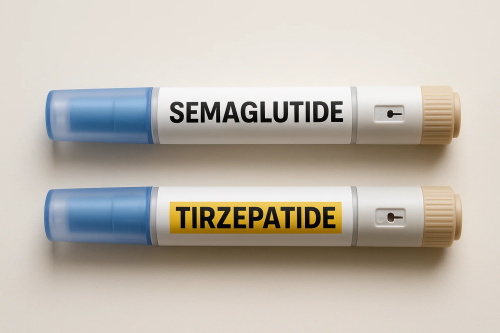
On September 5, 2025, the World Health Organization (WHO) officially released the 24th edition of its Model List of Essential Medicines. Among the most striking updates in this globally significant document is the addition of two drugs that have attracted enormous attention from both the medical community and society in recent years—Semaglutide and Tirzepatide.
Both belong to the class of GLP-1 receptor agonists. Initially developed for the treatment of type 2 diabetes, these medicines have since revealed remarkable potential in weight management, cardiovascular protection, and even in the field of neurodegenerative diseases.
WHO’s decision signals not only the shift of GLP-1 drugs from “innovative therapies” to “indispensable public health tools,” but also highlights a broader transformation: obesity, one of the most pressing health challenges of the 21st century, has officially entered a new era of pharmacological intervention.
Obesity and Diabetes: A Dual Public Health Burden
Over the past decades, both global obesity rates and the incidence of diabetes have risen sharply. The medical community has long recognized obesity as a complex, chronic metabolic disease, not merely a lifestyle concern. Clinical evidence shows that nearly 90% of people living with obesity suffer from at least one comorbidity, such as hypertension, dyslipidemia, type 2 diabetes, or metabolic-associated fatty liver disease.
Obesity and diabetes often reinforce each other, creating a vicious cycle that significantly increases the risks of cardiovascular disease, certain cancers, and premature death.
The burden on public health systems is equally staggering. In member countries of the Organisation for Economic Co-operation and Development (OECD), obesity-related illnesses already account for more than 8% of total healthcare expenditures. The situation is even more challenging in low- and middle-income countries, where healthcare resources are limited while obesity and diabetes prevalence are rising at an alarming pace.
Against this backdrop, finding effective strategies to control weight and improve metabolic health has become a global priority. While lifestyle modifications—diet and exercise—remain foundational, they often fail to achieve sustainable, long-term results for most patients. As a result, drug-based interventions are now increasingly viewed as essential complements to traditional methods.
WHO’s Model List of Essential Medicines: The Global Compass
Since its first publication in 1977, the WHO Model List of Essential Medicines has been regarded as the “compass” for global drug policy. Medicines included in the list must meet three fundamental criteria:
1. Proven clinical effectiveness;
2. Established safety through rigorous evaluation;
3. Indispensability in meeting the basic healthcare needs of populations.
More than 150 countries now directly or indirectly use this list to shape their procurement and reimbursement policies. Whether a drug appears on the list often determines its global accessibility and affordability.
Thus, the inclusion of Semaglutide and Tirzepatide is not only a recognition of their efficacy and safety but also a reflection of WHO’s strategic shift in treating obesity and diabetes. From this point forward, pharmacological interventions for obesity will no longer be considered optional—they will be seen as part of basic global healthcare provision.
GLP-1 Drugs: A Dual Pathway from Glucose Control to Weight Reduction
1. The Physiology of GLP-1
GLP-1, or Glucagon-Like Peptide-1, is a hormone secreted by intestinal L-cells. Its key physiological roles include:
- Stimulating insulin secretion, but only when blood glucose is elevated (thereby lowering the risk of hypoglycemia);
- Suppressing glucagon release, which reduces hepatic glucose output;
- Delaying gastric emptying, moderating postprandial glucose spikes;
- Acting on the central nervous system to curb appetite and reduce food intake.
These effects make GLP-1 a highly effective target for both blood sugar regulation and weight control.
2. Semaglutide
Semaglutide is a GLP-1 analogue with 94% sequence homology to the natural human hormone. Its major advantages include:
- A glucose-dependent mechanism that minimizes hypoglycemia risk;
- Strong clinical results showing average weight loss of 17%, with effects sustained for at least two years;
- Significant reductions in waist circumference and visceral fat.
Moreover, Semaglutide has been officially approved for reducing the risk of major cardiovascular events, such as heart attacks and strokes, in people with type 2 diabetes.
3. Tirzepatide
Tirzepatide stands out because it activates not only GLP-1 receptors but also GIP (Glucose-Dependent Insulinotropic Polypeptide) receptors. This dual action makes it a “twin-target” therapy. Its mechanism includes:
- Stimulating insulin secretion in response to elevated glucose;
- Lowering glucagon levels to suppress hepatic glucose output;
- Directly acting on appetite centers in the brain to markedly reduce food intake.
Clinical trials have demonstrated average weight loss of 20%, with some high-dose groups achieving even greater results than Semaglutide. For patients with obesity complicated by metabolic disorders, these outcomes are particularly significant.

The Far-Reaching Impact of WHO’s Decision
1. Improved Access
One of the biggest barriers to GLP-1 therapy has been its high cost. With WHO now designating these medicines as essential, governments and international organizations will be more likely to include them in insurance coverage and public procurement—especially benefiting patients in resource-limited settings.
2. Market Expansion and Price Reduction
Rising global demand will incentivize pharmaceutical companies to expand production capacity. By 2030, demand for Semaglutide and Tirzepatide is projected to reach tens of tons annually. Larger production scales may reduce costs and eventually make these drugs more affordable worldwide.
3. A Paradigm Shift in Obesity Management
For decades, obesity treatment relied primarily on lifestyle modifications, with medications considered secondary. WHO’s recognition officially marks the pharmacological era of obesity care, reshaping clinical guidelines and public perception.
4. Comprehensive Chronic Disease Management
Beyond diabetes and obesity, GLP-1 drugs have shown promise in reducing cardiovascular risk, managing non-alcoholic steatohepatitis (NASH), and possibly even slowing the progression of Alzheimer’s disease. Over the long term, these agents could become central tools for multi-condition chronic disease management.
Safety and Limitations
Despite their effectiveness, Semaglutide and Tirzepatide are not without drawbacks. The most common side effects are gastrointestinal, including nausea, vomiting, diarrhea, constipation, and abdominal pain. These typically occur in the early phases of treatment and often subside with time.
More serious risks include:
- Rare but severe conditions such as pancreatitis and gastroparesis;
- Potential reduction in lean muscle mass along with fat loss, a concern especially for older patients;
- Weight regain after discontinuation, indicating the need for long-term therapy;
- Possible hypoglycemia when combined with other glucose-lowering agents.
For these reasons, professional medical supervision is essential, and self-medication should be strongly discouraged.
From Individual Therapy to Public Health Strategy
WHO’s move will reshape healthcare at multiple levels:
- Policy level: More countries are expected to add GLP-1 drugs to insurance reimbursement systems.
- Research level: Studies on their potential applications in NASH, Alzheimer’s, and other conditions will likely accelerate.
- Societal level: Public understanding of obesity may shift—from being viewed as a lifestyle failure to being recognized as a chronic disease that requires medical intervention.
- Industrial level: Pharmaceutical companies will intensify efforts to develop more efficient, user-friendly GLP-1 therapies, including oral formulations.
As more evidence accumulates and as access expands, GLP-1 drugs may eventually become standard treatments available to millions worldwide. This development is not just a milestone in medicine, but also a meaningful step toward building a more equitable and healthier global community.
FAQ
1. Are Semaglutide and Tirzepatideweight-loss drugs or diabetes drugs?
Both. They were originally developed for type 2 diabetes, but are now widely used and approved for weight management due to their strong effects on appetite and metabolism.
2. Does being on the WHO Essential Medicines List mean these drugs are cheap?
Not immediately. However, inclusion typically leads to:
- Increased government negotiation on pricing
- Wider insurance coverage
- Potential generic competition in the future
Over time, this usually improves affordability.
3. Can anyone use GLP-1 drugs for weight loss?
No. These medications are generally prescribed for:
- Individuals with BMI ≥30, or
- BMI ≥27 with related health conditions
They require medical supervision due to potential side effects and contraindications.
4. Will the weight come back after stopping the medication?
In many cases, yes. Clinical evidence suggests that weight regain is common after discontinuation, which is why these drugs are often considered part of long-term treatment strategies.
5. Are there risks beyond common side effects like nausea?
Yes. Although rare, more serious risks include:
- Pancreatitis
- Gastroparesis
- Possible muscle mass loss
Proper monitoring by a healthcare provider is essential.
6. Why is WHO focusing on obesity now?
Because obesity is increasingly recognized as a chronic disease with systemic effects, not just a lifestyle issue. It significantly contributes to:
- Cardiovascular disease
- Diabetes
- Certain cancers
This shift reflects a broader transformation in global health priorities.
References
- Wilding, J. P. H., et al. (2021). Once-weekly semaglutide in adults with overweight or obesity. New England Journal of Medicine, 384(11), 989–1002. https://doi.org/10.1056/NEJMoa2032183
- Jastreboff, A. M., et al. (2022). Tirzepatide once weekly for the treatment of obesity. New England Journal of Medicine, 387(3), 205–216. https://doi.org/10.1056/NEJMoa2206038
- World Health Organization. (2025). WHO Model List of Essential Medicines – 24th List. Geneva: WHO.
- Davies, M. J., et al. (2021). Management of hyperglycemia in type 2 diabetes, 2021. Diabetes Care, 44(11), 2589–2625.
- Rubino, D., et al. (2021). Effect of continued weekly subcutaneous semaglutide vs placebo. JAMA, 325(14), 1414–1425.
- American Diabetes Association. (2024). Standards of care in diabetes—2024. Diabetes Care, 47(Supplement 1), S1–S350.
About the Author
Dr. Ethan Caldwell, MD, MPH
Dr. Caldwell is a physician trained in internal medicine with a Master of Public Health specializing in global health policy and chronic disease epidemiology. He has over 10 years of experience analyzing metabolic diseases, healthcare systems, and pharmaceutical access across North America and Europe.
His work focuses on translating complex medical and policy developments into practical insights for the public, particularly in areas such as obesity, diabetes, and cross-border healthcare access. He has contributed to multiple health policy reviews and regularly writes evidence-based articles for international audiences.
Editorial Transparency Statement
This article is intended for informational and educational purposes only. It is based on publicly available research, clinical trial data, and global health policy updates.
The publisher does not sell, promote, or affiliate with any pharmaceutical products mentioned.
No sponsorship or financial incentives were received in the creation of this content.
Readers are encouraged to consult qualified healthcare professionals before making any medical decisions.
This article is for informational purposes only and does not constitute medical advice. Please consult a qualified healthcare professional for personalized guidanc
Recommend for you:

Mushroom Adaptogens: Lion’s Mane, Reishi, and Cordyceps Explained
Beyond providing rich nutrition at the dinner table, certain “functional mushrooms” have gained recognition for their unique active compounds, which are believed to act as adaptogens.
Food intolerances vs. Allergies: Diagnosis and Management
With increasingly diverse food choices and changes in lifestyle and environment, conditions related to food consumption are becoming more prevalent.
Aging and Anxiety: Why Worry Intensifies with Age and How to Break the Cycle
In traditional thinking, aging has long been regarded as a natural rhythm, unfolding slowly like the changing of the seasons.
Nutrition for Your Eyes: The Science Behind Lutein, Zeaxanthin, and Preventing Macular
Human beings are able to perceive the world with remarkable clarity thanks to the eyes, a finely tuned “optical instrument.”