
How Sugar Alternatives Like Allulose and Monk Fruit Impact Health

Reading Time: 10–12 minutes
Key Highlights (Simple Question-Style)
- What are the main types of sugar substitutes, and how do they differ from regular sugar?
- How does allulose affect blood sugar, insulin, and gut health?
- What are the benefits and precautions of monk fruit extract?
- How do stevia and tagatose compare in sweetness, calorie content, and metabolic effects?
- Which natural sweeteners are best for baking, blood sugar control, or daily use?
- What potential digestive issues or precautions should users consider with these sweeteners?
Traditional sugars such as sucrose and glucose, while undeniably delicious, often come with health risks, including high caloric content and rapid spikes in blood sugar. As a result, sugar substitutes (sweeteners) have gained popularity and have made their way into beverages, snacks, baked goods, and even health supplements.
Sugar substitutes are substances that provide sweetness but usually contain fewer calories or are metabolically inactive compared to regular sugar. Their role is simple yet significant: satisfying people’s craving for sweetness while reducing overall sugar consumption. Based on their source and nature, sweeteners are generally divided into two broad categories: artificial sweeteners (such as aspartame, sucralose) and natural sweeteners (such as allulose, monk fruit extract, stevia, and tagatose). Compared with synthetic options, natural sweeteners are often perceived as safer and may even offer additional metabolic benefits.
1. Allulose: A Sugar That Looks Like Fructose but Behaves Differently
Allulose (D-allulose) is a rare natural sugar with about 70% the sweetness of sucrose. It occurs naturally in very small amounts in foods like wheat, figs, kiwis, and raisins.
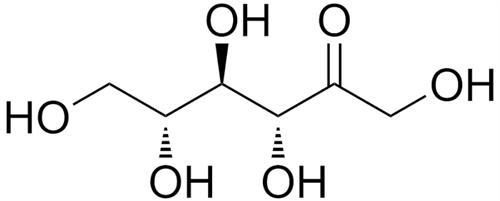
Chemically, allulose and fructose are almost identical—both share the same molecular formula (C₆H₁₂O₆). The difference lies in the arrangement of atoms on the third carbon atom, making them epimers. This seemingly small difference changes their metabolic fate dramatically.
Metabolic characteristics:
- Allulose is absorbed in the small intestine like fructose, but since humans lack the enzyme to metabolize it, most of it passes unchanged into the bloodstream and is later excreted in urine.
- A small fraction reaches the large intestine, where gut microbes may ferment it slightly, but the energy yield is negligible.
- Unlike fructose, it does not raise blood sugar, insulin, triglycerides, or uric acid levels, and it does not contribute to dental cavities.
Potential health benefits:
Research suggests that allulose might do more than simply provide a calorie-free sweetness:
- It can reduce glucose absorption and blunt post-meal blood sugar spikes.
- It may improve insulin sensitivity and help protect pancreatic β-cell function.
- Animal studies show it might stimulate GLP-1 release (a hormone that increases satiety), inhibit fat synthesis, and promote fat breakdown.
Because of these properties, allulose is sometimes called a “functional sweetener.” However, most of these effects are based on animal studies, and more human clinical research is still needed.
Safety and precautions:
- Allulose has been approved for food use in several countries.
- It is generally safe when consumed in moderate amounts, but excessive intake may cause bloating, abdominal pain, or diarrhea.
- Safety data in infants, pregnant women, and breastfeeding women are lacking, so these groups are advised to avoid it.
Overall, allulose comes closest to mimicking the taste and texture of regular sugar while avoiding its metabolic downsides, making it a highly promising sugar substitute.
2. Monk Fruit Extract: A Natural Sweetness from Southern China
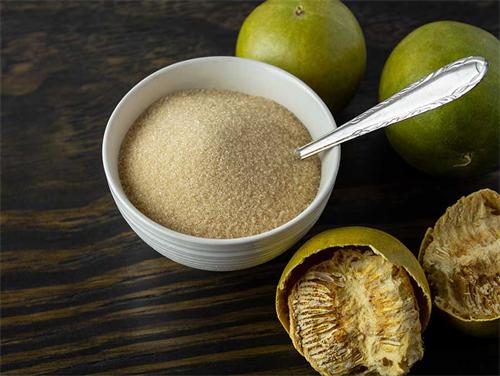
Monk fruit, scientifically known as Siraitia grosvenorii, is a round, green fruit that originates from the mountainous regions of southern China. For centuries, it has been valued in traditional Chinese practices, particularly for easing throat discomfort and supporting overall respiratory wellness. Its sweetness comes mainly from mogrosides, a group of compounds found in the fruit. Among them, mogroside V is the most potent.
Sweetness and properties:
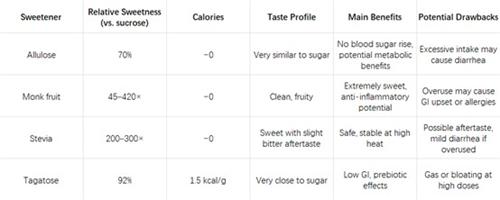
- Mogroside V can be 45 to 420 times sweeter than sucrose, depending on concentration.
- It contributes almost no calories and does not cause blood sugar spikes.
- It does not promote tooth decay.
- It is heat stable, making it suitable for baking, cooking, and beverage production.
Potential health benefits:
Emerging research suggests monk fruit extract may provide additional metabolic and health benefits:
- It may improve intestinal barrier function and reduce inflammation.
- It appears to regulate gut microbiota composition.
- It could potentially play a role in type 2 diabetes management.
Usage and risks:
- Due to its high sweetness, only a small amount is needed.
- Overconsumption may lead to bloating, diarrhea, or gastrointestinal discomfort.
- Some individuals may be allergic, experiencing rashes or respiratory issues.
Compared with allulose, monk fruit extract has essentially zero calories and higher sweetness but a slightly different taste profile—often described as clean and fruity. It is frequently blended with other natural sweeteners such as erythritol or stevia to balance flavor.
3. Stevia: An Ancient Plant with a Slight Herbal Aftertaste
Stevia is derived from the leaves of Stevia rebaudiana, a plant native to South America. Its sweetness comes mainly from steviosides and rebaudioside A, compounds that are 200 to 300 times sweeter than sucrose.
Characteristics:
- Almost calorie-free.
- It is particularly beneficial for individuals managing diabetes or for those who are focused on controlling their body weight.
- Stable at high temperatures, making it appropriate for baking and cooking.
Health impacts:
- Regulatory bodies such as the FDA and JECFA consider purified stevia extracts safe for human use.
- Studies show it does not raise blood sugar and may even help improve blood pressure or insulin sensitivity.
- However, it sometimes leaves a slightly bitter or grassy aftertaste, which is why it is often blended with other sweeteners.
Safety considerations:
- Early research raised concerns about carcinogenicity, but high-purity extracts have since been proven safe.
- The Joint FAO/WHO Expert Committee on Food Additives (JECFA) has set an acceptable daily intake (ADI) of 4 mg per kilogram of body weight. For children, the limit is proportionally lower.
- Overconsumption may cause mild diarrhea in sensitive individuals.
Stevia was one of the first natural sweeteners to gain global regulatory approval and remains a widely used alternative in foods and beverages.
4. Tagatose: A Sweetener That Doubles as a Prebiotic
Tagatose is another rare sugar and an epimer of fructose. It is naturally present in small amounts in dairy products such as milk powder, yogurt, and cheese.
Sweetness and caloric value:
- About 92% as sweet as sucrose, with a very similar taste profile.
- Provides only 1.5 kcal per gram, roughly one-third the calories of sucrose.
- Its glycemic index (GI) is only 3, compared with sucrose (68) and fructose (24).
Health advantages:
1. Blood sugar control: Tagatose inhibits α-glucosidase, an enzyme that breaks down carbohydrates, thereby slowing digestion and reducing post-meal glucose spikes.
2. Weight management: A portion of absorbed tagatose is metabolized in the liver in a way that consumes more energy than it yields, resulting in very low net caloric contribution.
3. Gut health benefits: About 80% of ingested tagatose is not absorbed in the small intestine and instead ferments in the large intestine. Beneficial bacteria such as bifidobacteria and lactobacilli use it to produce short-chain fatty acids (like butyrate), which nourish colon cells and inhibit pathogenic bacteria. This may reduce risks of colon cancer and inflammatory bowel conditions.
Precautions:
- Consuming it in large amounts can sometimes cause digestive discomfort, such as gas or bloating, as a result of fermentation in the gut.
- Clinical studies suggest that as little as 7.5 grams per day can increase beneficial gut bacteria within two weeks, but intake should be increased gradually to avoid discomfort.
5. Comparing Natural Sweeteners: Which One Fits Your Needs?
While all four natural sweeteners share the benefit of lowering caloric intake and reducing blood sugar fluctuations, each has unique features:
Practical recommendations:
1. For everyday sugar replacement: Allulose and tagatose most closely mimic regular sugar in both sweetness and mouthfeel.
2. For strict blood sugar control: Monk fruit extract and stevia are ideal due to their extremely low or zero caloric content.
3. For baking and cooking: Monk fruit and stevia are heat stable and work well in processed foods.
4. Personal tolerance matters: Some individuals may experience digestive discomfort with certain sweeteners; it’s important to test tolerance levels.
Conclusion
Sweetness is one of the pleasures of eating, but excessive consumption of traditional sugar is closely linked with obesity, diabetes, and cardiovascular disease. Natural sugar substitutes provide an alternative that allows people to enjoy sweetness while reducing health risks.
That said, no sugar substitute should be seen as a free pass for unlimited consumption. Moderation, balanced diets, and healthy lifestyles remain essential. With mindful selection and moderate use of natural sweeteners, people can satisfy their taste for sweetness without compromising their metabolic well-being.
FAQ
1. Are allulose, monk fruit, stevia, and tagatose completely safe?
Generally, yes, when consumed in moderate amounts. Overconsumption can cause gastrointestinal discomfort in sensitive individuals. Safety data for infants, pregnant, and breastfeeding women is limited for some sweeteners, especially allulose.
2. Which sweetener is closest to regular sugar in taste and texture?
Allulose and tagatose closely mimic the taste and mouthfeel of sucrose, making them ideal for everyday sugar replacement.
3. Can these natural sweeteners help with blood sugar control?
Yes. Allulose, monk fruit, stevia, and tagatose have minimal impact on blood sugar and insulin levels, making them suitable alternatives for individuals with diabetes or metabolic concerns.
4. Are these sweeteners suitable for baking and cooking?
- Monk fruit and stevia are heat stable and suitable for baking or beverage production.
- Allulose can also be used in cooking but may brown differently than sucrose.
- Tagatose performs similarly to sugar in recipes but may require gradual introduction to avoid digestive issues.
5. Can overuse cause health issues?
Yes. High intake may result in bloating, gas, diarrhea, or other gastrointestinal discomfort. Moderation is recommended.
6. Do these sweeteners contribute to weight loss?
They are low- or zero-calorie alternatives that reduce sugar intake, which can aid in weight management. Some (e.g., allulose and tagatose) may also slightly enhance satiety or support gut microbiota health.
References
1. Whiteside, S. A., et al. (2022). Natural sweeteners and metabolic health: A systematic review. Nutrients, 14(3), 512.
2. Iida, T., et al. (2018). Effects of D-allulose on glycemic control and insulin sensitivity in humans. Journal of Clinical Biochemistry and Nutrition, 62(1), 42–47.
3. Wang, L., et al. (2021). Mogrosides from monk fruit: Nutritional and functional perspectives. Food & Function, 12(15), 6205–6215.
4. Toews, I., et al. (2019). Stevia and human health: Safety, benefits, and metabolic impact. Frontiers in Nutrition, 6, 134.
5. Matsumoto, M., et al. (2020). Tagatose as a functional sugar: Effects on gut microbiota and glycemic control. European Journal of Nutrition, 59(7), 3157–3168.
6. U.S. Food & Drug Administration (FDA). (2022). Generally Recognized as Safe (GRAS) Substances. [https://www.fda.gov/food/food-ingredients-packaging/generally-recognized-safe-gras](https://www.fda.gov/food/food-ingredients-packaging/generally-recognized-safe-gras)
About the Author
Dr. Olivia Bennett, PhD, Nutrition Science and Metabolic Health
Dr. Olivia Bennett is a nutrition scientist specializing in metabolic health, natural sweeteners, and dietary interventions for chronic disease prevention. She has over 12 years of research experience studying sugar substitutes, gut microbiome interactions, and glucose metabolism, and frequently publishes in peer-reviewed journals on functional foods and nutraceuticals.
Editorial Transparency Statement
- This article is for educational purposes only and based on peer-reviewed studies and authoritative sources.
- No commercial interest or product promotion influenced the content.
- Readers are encouraged to consult healthcare professionals before incorporating new sweeteners into their diet, especially those with metabolic or gastrointestinal conditions.
Disclaimer
This content is for general informational purposes only and does not constitute medical advice.
- Always consult a qualified healthcare professional before making changes to your diet or adding sugar substitutes.
- Individual responses may vary based on health status, age, and digestive tolerance.
- The authors and publisher are not responsible for outcomes from using this information.
Recommend for you:

Can Supplements Help with Genetic and Metabolic Disorders?
Many people are becoming aware that health is not one-size-fits-all; genetics, lifestyle, and environmental factors interact to influence an individual’s risk for disease and their overall wellness.
Your Decade-by-Decade Guide to Preventive Health Screenings (From 40s to 70+)
Preventive health care is often overlooked until symptoms appear. Yet the most effective way to extend quality of life is through early detection and consistent monitoring.
How Social Isolation Accelerates Anxiety in Older Adults
How does social isolation affect the brain, stress hormones, and cognition?
The “Light Sweat” Workout: Why Gentle Exercise Fits Best in Autumn
As the summer heat fades and autumn’s crisp air settles in, our bodies naturally crave a slower, gentler rhythm.